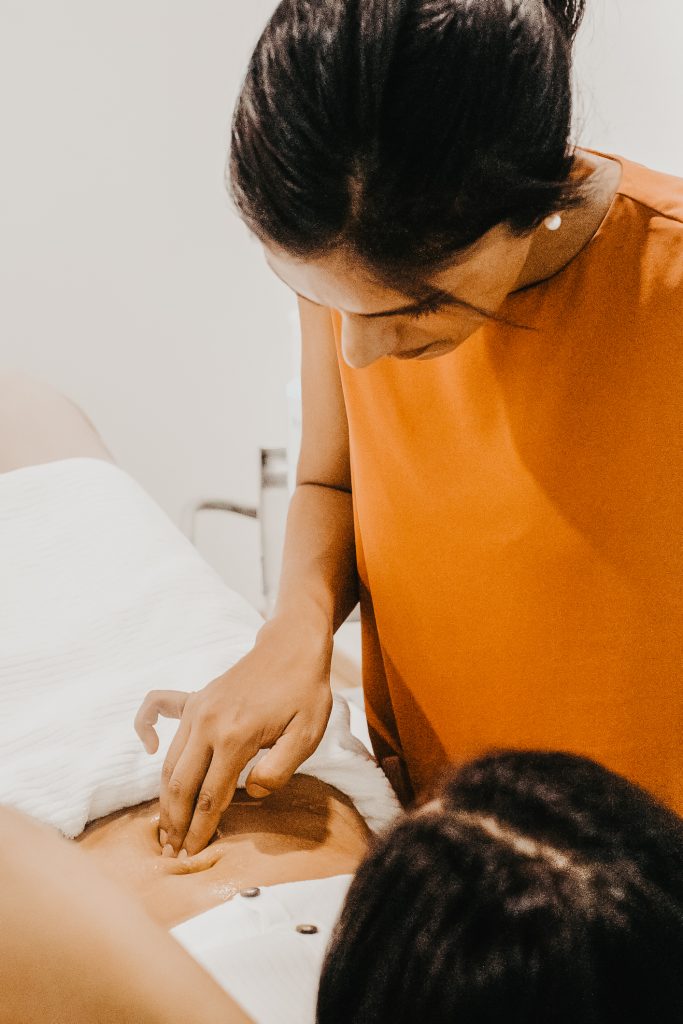
With over 17 years of experience as a physiotherapist and 7 years specialising in women's health, Preet Singh founded Embrace Physiotherapy to give women in Singapore access to specialist pelvic floor and postnatal care. She writes and practises from the belief that every woman deserves answers, not just reassurance.
You are home. Your baby is here. And somewhere beneath the waistband of your underwear is a scar that is already beginning to heal. In Singapore, nearly 2 in 5…
The excitement of a positive pregnancy test brings a multitude of decisions and appointments. You’ve planned for your paediatrician, gynaecologist/obstetrician, lactation consultant, and well-baby clinic visits, but have you planned…
Pregnancy places a lot of stress on your pelvic floor as it accommodates the extra weight of your growing uterus. The pelvic floor, regardless of childbirth method, weakens up to…
The choice to undergo surgery is often a challenging one. At times, the option may be presented unexpectedly, while in other instances, you may have had the opportunity to mentally…
The decision to undergo a hysterectomy is often not an easy one. It may leave you with more questions than answers. The reason for a hysterectomy does not always have…
A hysterectomy is a surgical procedure that involves the removal of the uterus, one of the major organs unique to the female body. When a woman decides to undergo this…
Navigating postnatal recovery, especially when dealing with diastasis recti, can feel like going down a rabbit hole. Choosing the right exercises to manage diastasis recti can be challenging due to…
Ever heard of the pelvic floor? Do you know where it is, or better yet, have you seen it? The pelvic floor— or specifically a woman’s pelvic floor, is a…
The pelvic floor consists of muscles forming a hammock across the pelvic outlet, supporting pelvic organs like the uterus, bladder, and bowel. Pelvic organ prolapse (POP) arises when the connective…
Did you know that up to 70% of women suffer from pelvic organ prolapse (POP) but only 25% are symptomatic? While POP is usually non-life-threatening, it can significantly affect your…
Faecal incontinence is often considered the most distressing type of pelvic floor dysfunction, affecting around 5% of Singaporeans. However, this figure may be an underestimate, as many individuals believe it…
Urinary incontinence can be quite an embarrassment, even potentially leading to anxiety and discouraging someone from going outside. Research shows that up to one-third of women will encounter urinary incontinence…
Vulvodynia refers to the pain in the vulva persisting for more than three months, without an identifiable infection or other medical causes (Bornstein et al., 2016). The vulva comprises the…
Interstitial cystitis (IC) or bladder pain syndrome (BPS) refers to the “unpleasant sensation—pain, pressure, or discomfort—often associated with the bladder or lower urinary tract infections (UTI) persisting for more than…
Imagine taking your car to the mechanic for a service, and the mechanic hands you the bill without looking under the bonnet. Quite odd, isn’t it? Guess what—this goes the…
Have you ever found it difficult to insert a tampon, undergo a PAP smear or have penetrative intercourse? If you said yes to any of these, there’s no need to…
During your prenatal visits to your doctor, don’t forget about your pelvic floor! Let’s delve deeper into why you and your baby need to have the best pelvic health during…
Coccydynia refers to pain in the coccyx, known as the tailbone. This type of pain can be a debilitating condition that hinders your ability to perform simple activities such as…
Across both Eastern and Western cultures, various traditional postpartum practices have been embraced to facilitate the mother’s recovery (Fuller & Jordan, 1981; Dennis et al., 2007). This recognition is well-deserved,…
The physiological changes of pregnancy or the demands associated with being a mum may take a toll on you and may lead to conditions like hand or wrist pain. This…