

“… helped to correct my diastasis recti even though I was two years postpartum. I had been recommended surgery by another physio I went to but Preet was very reassuring and worked with me to correct it with physio exercises.” – Kamini R.
How physiotherapy can help
Diastasis recti happens when the connective tissue down the middle of your abdomen, the linea alba, stretches to make room for your baby. The two halves of your six-pack muscle sit further apart, and the gap does not always close after birth. It is normal, not damage, and not your fault.
Here is what social media will not tell you. Most postpartum tummies are wider than they were, and that is normal. In one trial, 72% of women who were certain they had diastasis recti did not have a gap wide enough to count. An assessment often ends in relief, not a diagnosis.
And if you do have it, we can help. What matters is not the gap, but how your core handles pressure and load. The right training rebuilds real strength. Whether it closes the gap is less certain, and the research disagrees. Closing a gap was never the point. A body that works is.
At Embrace Physiotherapy in Katong, we start with your whole picture. Your birth history, your goals, and how your core behaves under real load, measured with real-time ultrasound. Then we build a plan that fits you. The plan might be one visit and a reassuring send-off. Or it might be a longer course of care, built around what your body needs.

The questions we hear most often
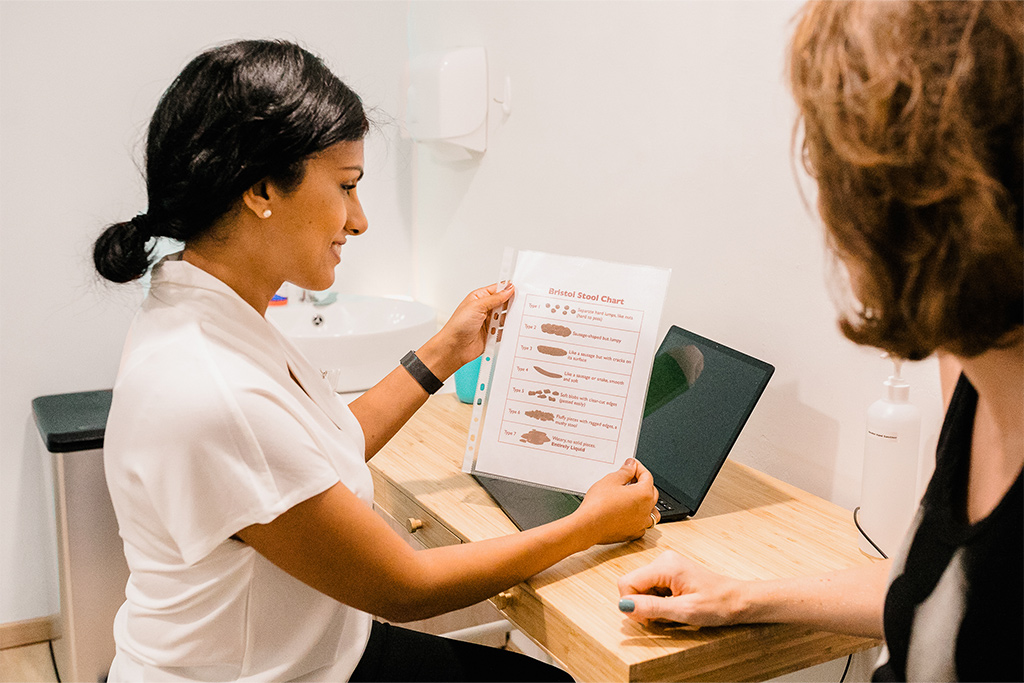
For many women it narrows. For some it closes fully. But the honest answer is that the research does not agree that exercise reliably closes the gap, and a strong core matters more than a perfect number. We measure your gap, its depth, and its tension. Then we track what your tummy can do: lift, carry, run, plank, without doming or back pain. Progress you can feel beats a number on a tape measure.
You can, and you should. The old advice to avoid all abdominal work has not held up. In a randomised trial, women who did supervised abdominal training, including curl-ups, got stronger and their gaps did not widen. What matters is how you manage pressure as you move. We coach that, step by step. We will not put your life on hold for a number.
It can, and size decides it. A separation over 3cm is linked with weaker abdominal muscles and more back pain in the years after birth. Below that, the effect on daily life is usually minimal. So we take it seriously without making you anxious. If your gap is small and your core works well, we will tell you plainly and send you on your way.
Your treatment journey at Embrace Physiotherapy
1. Explore
Your first appointment is about understanding you. We take a full history of your pregnancy and birth, your symptoms, and what has been changing. We measure your gap, its width, depth, and tension, using our hands and real-time ultrasound, and we watch how your core handles pressure when you move. Nothing proceeds without your consent.

2. Educate
We explain what we find in plain language. No jargon, no alarm. Together we set goals and shape a treatment plan that may include abdominal and pelvic floor training, clinical exercise, hands-on treatment, or a referral if that is the right step. You leave understanding your body better than when you arrived.

3. Equip
This is where the real work begins. You receive hands-on treatment in the clinic and a home programme built around your goals. This goes well beyond sucking your tummy in. Deep abdominal and pelvic floor training, breathing and pressure management, and how you load your body all play a part. We fit it to your life.
4. Engage
As your symptoms settle and your strength builds, the focus shifts toward resilience. That might mean progressing your exercises, easing back into activities you have been avoiding, or joining one of our clinical rehabilitation classes. The aim is not just a narrower gap. It is getting you back to the things you love.

5. Establish
We refine the progress you have made and build habits that hold. Your movement and your core are tested against the demands of real life. Running, lifting, carrying your child, swimming. We make sure your body is genuinely ready for all of it, not just comfortable on the treatment table.
6. Embrace
A body you can trust. A core you do not have to think about. This is the goal we work toward together. We stay available for check-ins along the way, so if anything shifts down the track, you have support on hand and you are never starting from scratch.

The right support changes what diastasis recti means for your life. A core you can trust, exercise without second-guessing, and a body that feels like yours again. Book at Embrace Physiotherapy in Katong.

Diastasis Recti FAQs
Diastasis recti, or abdominal separation, is a widening of the gap between the two halves of your six-pack muscle. The connective tissue between them, the linea alba, stretches during pregnancy to make room for your baby. It is common: about 1 in 3 women still have it a year after birth. It can also affect women who have never been pregnant. It is not a hernia. It is not dangerous. And it responds well to the right care.
You will see it described as mild, moderate, or severe, measured in finger-widths or centimetres. Here are the numbers we work with. In women who have never been pregnant, the gap averages around 1.9cm. After one baby, around 2.4cm. After two or more, around 2.6cm. Clinically, we act on a gap over 2.8cm after one baby, or over 3.0cm after two or more. Below that, a wider tummy is usually just a postpartum tummy. Width is only part of it. Depth and tension matter just as much, which is why two women with the same number can need very different plans.
Lie on your back with your legs straight. Lift your head so only the tips of your shoulder blades touch the surface, and feel along the midline above and below your belly button. A visible bulge or doming, or a gap you can sink your fingers into, suggests diastasis recti. A home check is a start, but it cannot measure depth or tension, and it is easy to frighten yourself with a normal result. In one trial, 72% of women who were sure they had it did not meet the threshold. An assessment tells you what your gap actually means.
Massage will not close a tummy gap. Hands-on work does not stretch or lengthen anything, and nothing is repaired by being pressed on. What it does is change how your muscles switch on. What we see in clinic is that the obliques at the sides of your abdomen work overtime, and when they over-fire they dampen the deep core underneath, which can make the pooch look worse, not better. Releasing that tension is a neuromuscular effect: it quietens the overactive muscles long enough for your deep core to fire. We use it as a test. If your deep core switches on better afterwards, we know where to take your programme. Then the real work starts: activation, strength, and load. That is the part that lasts.
Most women need a course of care over several months, not weeks. Strength and connective tissue rebuild gradually, and feeling stronger usually comes first. The gap itself may narrow, and it may not, and the evidence on that is genuinely mixed. What we can say with confidence is that the right training rebuilds abdominal strength and gets women back to lifting, running, and carrying their children. We will be honest with you at every step.
No. Muscle responds to training at any age and any stage, whether your youngest is 6 months or 16 years old. The research includes women well beyond the early postpartum window, and the same principles apply: assess properly, rebuild strength, retrain how your core handles pressure. Starting later simply means starting now.
Further reading…

Bumping Up the Fitness Game: Is It Safe to Exercise during Pregnancy?

The Core Recovery: Diastasis Recti in Women

Carrying the Mum Load: Carpal Tunnel Syndrome in Pregnancy and Postpartum

Bound for Healing: Postpartum Abdominal Binding

Managing Pelvic Organ Prolapse

POP Goes the Rehab: Pelvic Floor Rehabilitation for Pelvic Organ Prolapse

Core Connection: How to Help Your Diastasis Recti Recover

The 6-Week Mark: Postnatal Appointment

Healing from your c-section scar: what to expect and when to get help

Weighting and Expecting: Pelvic Girdle Pain During Pregnancy

Obstetric Anal Sphincter Injuries (OASIs): The Women’s Health Physiotherapy Treatment


