
You’ve just had a baby. And somewhere in the hours that followed, you may have noticed stitches, or pain or a feeling that something happened down there that nobody quite explained.
In Singapore, women are not always told whether they had a tear or a cut during birth. Many leave the delivery suite without knowing what happened to their perineum, or what it means for their recovery.
If that’s you, this is where to start.
What are the grades of a perineal tear?
A perineal tear is graded 1 to 4, depending on how deep it goes and which muscles are involved, using the classification originally described by Sultan (1999) and reflected in current RCOG guidance.
The perineum is the tissue between the vaginal opening and the anus. It stretches during vaginal birth to let the baby through, and about 85% of women who give birth vaginally experience some degree of trauma to it as a result (Abdelhakim et al., 2020). Tearing during birth is common, not exceptional.
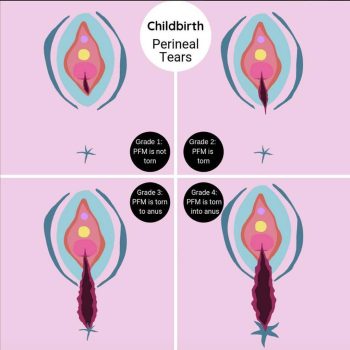
- Grade 1: The skin of the vaginal mucosa or perineum only. Often heals without stitches.
- Grade 2: Involves the perineal muscles beneath the skin. Usually requires suturing. An episiotomy is equivalent to a grade 2 tear.
- Grade 3: Extends into the anal sphincter muscles. Subdivided into
- 3a (less than 50% of the external anal sphincter torn)
- 3b (more than 50% torn), and
- 3c (both external and internal anal sphincters torn).
- Grade 4: Involves both sphincters and extends through the rectal mucosa, creating a connection between the vaginal and anal canal.
What is an OASIS tear and how is it treated?
OASIS stands for obstetric anal sphincter injury, the term for a grade 3 or 4 perineal tear. At Embrace Physiotherapy, we see this repaired surgically in an operating theatre, usually with antibiotics and laxatives afterwards, then followed by a pelvic floor assessment and physiotherapy.
OASIS affects approximately 3 to 5% of vaginal births in first-time mothers (Abdelhakim et al., 2020). Repair should happen in theatre by an experienced surgeon, not in the delivery suite, and a formal follow-up review, usually 6 to 12 weeks postpartum, is recommended practice (Royal College of Obstetricians and Gynaecologists, 2015).
Pelvic floor physiotherapy after OASIS has a genuine evidence base, though it is still developing. A 2025 single-centre study following 88 women for an average of nearly 4 years found pelvic floor physical therapy was linked to lower anal incontinence scores than no therapy at all, though the result sat right at the edge of statistical significance and did not extend to improving painful sex (Arcieri et al., 2025). That is a realistic picture, not a guarantee: physiotherapy helps continence outcomes, and sexual function often needs its own dedicated attention.
Not sure whether this is the right fit?
Grade 3 and 4 tears need a different recovery path to grade 1 and 2. If you are not sure which one you had, or nobody explained it clearly, this is worth checking.
Is an episiotomy the same as a tear?
An episiotomy is a planned surgical cut, not a tear, but it sits at the same tissue depth as a grade 2 injury.
It is made deliberately when delivery needs to be expedited, for fetal distress or an instrumental delivery, or when a severe tear looks likely. It is not routinely recommended without clinical indication (NICE, 2021). Episiotomies are not graded the same way as tears; they are described by type, midline or mediolateral, since the grading system applies to spontaneous tears only. Outcomes for grade 2 level trauma are broadly similar whether from a tear or a cut, though a spontaneous tear follows natural tissue lines and can heal well.
What increases the risk of a severe tear?
Several factors raise the risk of a grade 3 or 4 tear. Most are not things you could have controlled.
- First vaginal birth
- Asian ethnicity, particularly South Asian, linked to perineal tissue characteristics
- Baby’s birthweight above 4 kilograms
- A prolonged second stage of labour
- Instrumental delivery, particularly forceps
- Occiput-posterior position, baby facing upward during delivery
- Shoulder dystocia
A 2024 systematic review and meta-analysis found Asian women have significantly higher odds of OASIS than White women in high-income countries (Park et al., 2024). A large population-based study of over 36,000 first-time mothers separately found the risk of OASIS increased significantly once the second stage of labour passed 90 minutes (Stairs et al., 2022). Closer to home, a Singapore study of women delivering at a high-volume public hospital found Indian ethnicity, first births, higher birth weight, and older maternal age were all linked to episiotomy (Wu et al., 2013). Among women who did not have an episiotomy in that study, most tears were first or second degree, with third-degree tears uncommon at 0.4%. None of this is about assigning blame. It helps explain why some births result in more significant injury than others, and why we take ethnicity and labour history into account at assessment.
Can you reduce the risk of tearing?
Yes and doing so is a legitimate goal of antenatal care. 2 approaches have good evidence behind them.
Perineal massage
A 2024 systematic review and meta-analysis covering 10 randomised trials and 1,057 first-time mothers found perineal massage nearly tripled the chance of an intact perineum and roughly halved the risk of a second-degree tear (Yin et al., 2024). Massage performed during the second stage of labour reduced perineal pain more than antenatal-only massage did, though antenatal massage specifically lowered the risk of faecal and flatus incontinence at 3 months. The evidence is rated low to moderate quality, with real variation between studies in technique and timing, so treat this as a genuinely useful tool, not a guarantee.
Perineal massage is typically performed from 34 weeks, 2 to 3 times a week, for around 12 to 15 minutes. It can be done at home, but technique matters: done incorrectly, it is uncomfortable and less effective. Learning it properly, with guidance on pressure, positioning, and what to expect, makes a real difference.
Perineal massage is one of the core components of birth preparation physiotherapy at Embrace Physiotherapy. If you are pregnant and want to prepare your body for birth, our birth preparation appointments cover perineal massage technique alongside pelvic floor readiness, pushing strategies, and postnatal planning.
Find out more: Birth preparation at Embrace Physiotherapy
Pelvic floor training
Antenatal pelvic floor muscle training, when supervised by a physiotherapist, improves coordination and relaxation of the pelvic floor during pushing, both of which reduce perineal trauma. The 2021 NICE guidelines on pelvic floor dysfunction recommend supervised pelvic floor muscle training from 20 weeks for women with risk factors for pelvic floor dysfunction (NICE, 2021). No substantive update to this guideline has been found since it was published in December 2021.
A 2026 controlled trial of first-time mothers at 2 hospitals found that women who followed a structured antenatal pelvic floor training programme had a severe tear rate of 4.0%, against 14.7% in the group that did not (Incebiyik et al., 2026). This was not a randomised trial, women chose which group to join, so it shows a strong association rather than proof of cause and effect. The authors themselves call for larger randomised trials to confirm it. It is still one of the more direct pieces of evidence linking supervised pelvic floor training to fewer severe tears, not just fewer symptoms.
Set against that: the highest tier of evidence available is a Cochrane review published in October 2024, covering perineal techniques used during the second stage of labour itself. It concluded the evidence for most in-labour techniques is still very uncertain, with too few studies reporting the outcomes that matter most (Dwan et al., 2024). Antenatal and postnatal steps have better evidence behind them than what happens in the room during the second stage. Worth knowing so this section is not read as more settled than it is.
What happens after a tear or episiotomy?
Grade 1 and 2 tears and episiotomies are sutured in the birth suite, usually under local anaesthetic. The sutures dissolve over 4–6 weeks. Most women notice significant improvement in pain and discomfort within the first 2–3 weeks, though full tissue healing takes longer.
Grade 3 and 4 tears require surgical repair in an operating theatre by an experienced surgeon. Antibiotics and laxatives are usually prescribed. Recovery is more involved and longer.
In the first days after birth, do these:
- Ice packs applied to the perineum in the first 72 hours to reduce swelling
- A towel rolled up in a U- shape and placed under the thighs when sitting to reduce pressure on the perineum
- Side-lying for feeding where possible
- Stool softeners to make bowel movements more comfortable
- Perineal support (2 fingers wrapped in toilet paper) to splint the perineum during bowel movements
- Compression wear to help provide crutch support on your trips to the pediatrician and the other million appointments your baby may have!
PSST, therapeutic ultrasound (available at Embrace Physiotherapy) can be useful in reducing the swelling of the perineum too.
How long does a grade 2 tear take to heal?
For grade 1 and 2 tears, the wound itself generally closes within 2–3 weeks. Full tissue healing including the deeper muscle layers takes 6–8 weeks. Pain reduces progressively throughout this time. Most women notice a significant improvement by 3–4 weeks, though returning to exercise, intercourse, or prolonged sitting varies depending on the individual.
If pain is worsening after the first week, the wound looks inflamed, or you notice unusual discharge, see your obstetrician or GP. These are signs the wound may not be healing as expected.
What often goes unaddressed is everything beyond the wound itself. Research by Daremark et al. (2022) found that women with second-degree tears felt under-prioritised by healthcare providers, uncertain whether their symptoms were normal, and unsure how to exercise their pelvic floor correctly. Ongoing pain, difficulty with intercourse, or leaking urine or stool after 6 weeks are not things to simply accept.
Has something felt off since your tear or episiotomy, even weeks after you were told you’d healed?
A tear that is stitched and closed is not always a tear that is finished. If pain, numbness or leaking is still there, that is worth looking into properly.
Could it be something else?
Ongoing pain after a tear has healed is not automatically more tearing. Pudendal nerve irritation, an overactive pelvic floor, scar tissue restriction, infection, or an undiagnosed higher-grade injury can all cause similar symptoms, and each needs a different approach.
If you notice fever, spreading redness, worsening swelling, or discharge with an odour, that needs medical review first: contact your obstetrician or GP. For everything else on this list, a physiotherapy assessment can help work out which one is actually driving your symptoms.
If pain, numbness, or painful sex continues well past the expected healing window, or feels different in character, burning or shooting rather than a dull ache, a physiotherapy assessment can help work out which of the others is actually driving it, rather than assuming it is simply the original tear taking longer to settle. An undiagnosed sphincter injury is also possible: reviews of the OASIS literature note that a meaningful proportion of sphincter defects can go undocumented at the time of birth (Elsaid et al., 2026), which is one reason a hands-on pelvic floor assessment postnatally, not just a visual check, matters.
How can a women’s health physiotherapist help?
A women’s health physiotherapist works with you both before and after birth. If you’re reading this postnatally, it’s not too late. In fact, getting the right assessment early makes a meaningful difference to how well and how quickly you recover.
Before birth
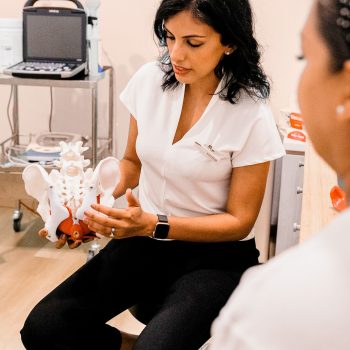
- Whole body strength personalised exercise program or attend our prenatal group classes to condition your body. Afterall, childbirth and labour is more than running a marathon.
- Breathing strategies and optimal fetal positioning with bodywork
- Teaching and practice perineal massage technique
- Assessing pelvic floor function and preparing the muscles for labour
- Providing guidance on positioning and pushing strategies
After birth
- Assessing the pelvic floor, including a pelvic floor examination where appropriate
- Scar tissue management for the perineal wound and any caesarean scar
- Hands-on therapy, ultrasound, massage, and stretching techniques for wound healing
- Bladder and bowel retraining where symptoms are present
- A supervised pelvic floor muscle training programme tailored to whether the muscles are weak, overactive, or have poor coordination. Note: sometimes it advised not to do pelvic floor exercises due to a muscle tear that’s not easily seen. We’ll write another blog on that at another time. The TLDR: best to be seen first.
Early, supervised physiotherapy leads to better outcomes than written advice alone: women who received biofeedback-assisted pelvic floor training from one week postpartum had measurably better outcomes than those given written instructions only (Wu et al., 2021). For women who have had an OASIS injury specifically, sexual function often needs separate, deliberate attention. A 2026 systematic review found women were around 30% less likely to have resumed sexual activity by 3 months, and reported more painful sex at 12 months, than women without this injury, though the certainty of this evidence is still low (Elsaid et al., 2026). This is exactly the kind of outcome a tailored pelvic floor and scar assessment is designed to address, alongside continence.
Improvement is typically noticeable within 4 to 6 sessions, with consistent home exercise between appointments playing an important role.

Why isn’t a general postnatal check-up always enough?
This is not something a general physiotherapist or a standard postnatal check can fully cover, and that is not a criticism of either. Singapore’s standard postnatal follow-up is typically a single 6-week review with the obstetrician, which is not always long enough to fully assess pelvic floor and scar recovery, particularly after a grade 3 or 4 injury.
A postnatal pelvic health assessment starts by working out exactly what is happening: whether pain, numbness, or bladder or bowel symptoms come from the tear itself, from the wider pelvic floor, from nerve irritation, or from something separate entirely, rather than assuming a single explanation. It also looks at the whole system, not just the wound: the pelvic floor, the hip, the lower back, and the deep abdominal muscles work as one unit after birth, and a change in one affects all the others. A protocol built for a general muscle strain will not necessarily fit tissue that has just been through childbirth and, in a grade 3 or 4 tear, surgical repair. Calibrating to where the body actually is, whether that is 6 weeks after a grade 2 tear or 6 months after an OASIS repair, is what a women’s health assessment is built to do.
If your 6-week check said you’re fine but it still doesn’t feel that way, it’s time for an assessment that looks at the full picture.
Our clinic in Katong sees this every week: women told they have healed, still dealing with pain, numbness or leaking, months on.
This blog was written by Preet Singh, women’s health physiotherapist and founder of Embrace Physiotherapy. It is for informational purposes only and does not constitute personal medical advice. Please seek assessment from a qualified healthcare professional.
References:
- Abdelhakim, A.M., Eldesouky, E., Elmagd, I.A., et al. (2020) ‘Antenatal perineal massage benefits in reducing perineal trauma and postpartum morbidities: a systematic review and meta-analysis of randomized controlled trials’, International
Urogynecology Journal, 31(9), pp. 1735-1745. - Arcieri, M., Battello, G., Graziano, A., Alfare Lovo, M., Restaino, S., D’Antonio, F., Lucidi, A., Segatti, M., Comuzzi, M., Barbui, E., Carpenedo, C., Biasutti, E., Driul, L. and Vizzielli, G. (2025) ‘The outcome of early perineal rehabilitation in obstetric anal sphincter injuries: a single-center experience’, Archives of Gynecology and Obstetrics, 311(6), pp. 1711-1719.
- Daremark, C., Andreasson, L., Gutke, A. and Fagevik Olsen, M. (2022) ‘Women’s experiences of the injury, recovery and desire for rehabilitation after a seconddegree vaginal tear: a qualitative study’, International Urogynecology Journal, 33(6), pp. 1521-1527.
- Dwan, K., Fox, T., Lutje, V., Lavender, T. and Mills, T.A. (2024) ‘Perineal techniques during the second stage of labour for reducing perineal trauma and postpartum complications’, Cochrane Database of Systematic Reviews, Issue 10, CD016148.
- Elsaid, N., Thomas, G.P., Bassett, P., Carrington, E.V., Episkopos, C., et al. and Vaizey, C.J. (2026) ‘Sexual function after obstetric anal sphincter injuries (OASIs): a systematic review and meta-analysis’, International Urogynecology Journal, pp. 1-11.
- Incebiyik, M., Palali, I., Er, Y., Tammo, O., Kizildemir, Y.Z., Adak, I.H. and Duken, R.K. (2026) ‘The effect of a pelvic floor training program on perineal trauma during birth: a patient-preference controlled clinical trial’, Scientific Reports, 16(1), article 16493.
- NICE (2021) Pelvic floor dysfunction: prevention and non-surgical management. NICE Guideline NG210. London: National Institute for Health and Care Excellence.
- Park, M., Wanigaratne, S., D’Souza, R., Geoffrion, R., Williams, S. and Muraca, G.M. (2024) ‘Asian-White disparities in obstetric anal sphincter injury: a systematic review and meta-analysis’, AJOG Global Reports, 4(1), article 100296. Available at:
https://doi.org/10.1016/j.xagr.2023.100296. - Royal College of Obstetricians and Gynaecologists (2015) The Management of Thirdand Fourth-Degree Perineal Tears. Green-top Guideline No. 29. London: RCOG.
- Stairs, J., Brown, M.M., Smith, A. and Woolcott, C. (2022) ‘Association between second stage of labour length and risk of obstetrical anal sphincter injury in nulliparous women: a population-based retrospective cohort study’, International
Urogynecology Journal, 33(6), pp. 1583-1590. - Sultan, A.H. (1999) ‘Obstetric perineal injury and anal incontinence’, AVMA Medical and Legal Journal, 5(6), pp. 193-196.
- Wu, L.C., Malhotra, R., Allen, J.C., et al. (2013) ‘Risk factors and midwife-reported reasons for episiotomy in women undergoing normal vaginal delivery’, Archives of Gynecology and Obstetrics. Available at: https://link.springer.com/article/10.1007/s00404-013-2897-6.
- Wu, T.F., Huang, L.H., Lai, Y.F., Chen, G.D. and Ng, S.C. (2021) ‘Early postpartum biofeedback assisted pelvic floor muscle training in primiparous women with second degree perineal laceration: effect on sexual function and lower urinary tract symptoms’, Taiwan Journal of Obstetrics and Gynecology, 60(1), pp. 78-83.
- Yin, J., Chen, Y., Huang, M., Cao, Z., Jiang, Z., et al. and Li, Y. (2024) ‘Effects of perineal massage at different stages on perineal and postpartum pelvic floor function in primiparous women: a systematic review and meta-analysis’, BMC Pregnancy and Childbirth, 24, article 405.
