
If you’ve been feeling not quite like yourself—dealing with vaginal dryness, discomfort during intimacy, or unexpected bladder issues—you’re not alone. And you’re certainly not imagining it. These are common experiences for women during the menopause transition and beyond. What you may not know is that these symptoms fall under a condition known as Genitourinary Syndrome of Menopause (GSM). And here’s the good news: brand-new guidelines released by the American Urological Association (AUA) in 2025 are bringing much-needed attention and clarity to the condition. Even better? These guidelines are putting pelvic health physiotherapy firmly in the spotlight (American Urological Association, 2025).
At Embrace Physiotherapy, Singapore’s trusted women’s health physiotherapy clinic, we believe that knowledge is power. This blog unpacks the new AUA guidelines in an approachable, empowering way—and most importantly, what they mean for YOU.
What is Genitourinary Syndrome of Menopause (GSM)?
GSM is a term that describes a collection of symptoms and changes to the vagina, vulva, bladder, and urinary tract due to decreasing oestrogen levels during perimenopause and in menopause. Think:
- Vaginal dryness or burning
- Pain during sex (dyspareunia)
- Frequent urinary tract infections
- Urgency or leaking urine
- Itching or discomfort in the vulva or vagina
These symptoms can be persistent and progressive, affecting quality of life, intimacy, and confidence. Too many women feel embarrassed to speak up or never ask at all, and many healthcare providers miss the signs.
In Singapore, a population-based study of women aged 40 to 60 found that urogenital symptoms were prevalent during perimenopause, yet they remain underreported. Many women do not raise these concerns with their healthcare providers, often due to embarrassment or the assumption that these symptoms are just a normal part of ageing. (Tan et al., 2014)
A regional study across five Asian countries, including Singapore, revealed that 57% of postmenopausal women experienced vaginal dryness and 43% reported irritation. Only 35% were aware of GSM, and just 25% had discussed their symptoms with a healthcare provider. (Chung et al., 2010)
What the New Guidelines Say (and Why They Matter to You)
The 2025 AUA guidelines have done something revolutionary: they’ve taken GSM seriously.
Here’s what’s new:
- Diagnosis Based on Symptoms: GSM can now be diagnosed based on what you report, not just physical exams. This is a big win for women who may have been dismissed or misdiagnosed in the past.
- Pelvic Floor Physiotherapy as a First-Line Treatment: For the first time, pelvic health physiotherapy has been acknowledged as a recommended, non-hormonal, first-line treatment for GSM symptoms.
- Use of Vaginal Estrogen: For women experiencing significant vaginal or bladder symptoms, low-dose vaginal estrogen may be recommended. It can help restore moisture, thickness, and elasticity to the tissues of the vagina and urinary tract, relieving dryness, pain, irritation, and even urinary urgency or infections.
- Personalised, Multidisciplinary Care: The guidelines promote a team-based approach that includes physiotherapists, gynaecologists, urologists, and more, all working together to create a plan that suits you.
What is Estrogen and Why is Vaginal Estrogen Important?
Estrogen is a hormone that plays a vital role in maintaining the health of your reproductive and urinary systems. It helps keep your vaginal tissues thick, elastic, and lubricated. It also supports the strength of your pelvic floor muscles, bones, and connective tissues.
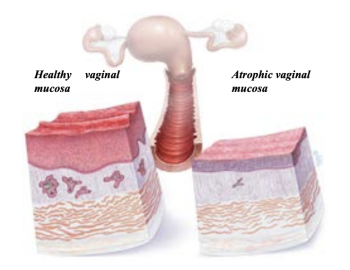
Image: International Urogynecological Association
When estrogen levels drop during menopause, these systems are affected. The pelvic floor muscles can weaken or atrophy, and the vaginal lining can become dry, thin, and more prone to irritation or infection.
Lower estrogen levels can lead to:
- Lower bone density
- Vaginal dryness
- Incontinence
- Bladder urgency and frequency
- Recurrent urinary traction infections
- Weaker muscles and loss of muscle mass
- Joint stiffness and reduced flexibility
- Loss of balance
In Singapore, commonly prescribed options for vaginal estrogen therapy include Vagifem pessaries and Premarin cream. These are low-dose, localised forms of estrogen applied directly on the vagina, designed specifically to treat vaginal and urinary symptoms without impacting the rest of your body. Typically, they’re used daily for two weeks and then reduced to twice a week. Always consult your doctor for the right approach for you.
Vaginal estrogen is considered a first-line therapy for GSM because it treats the root cause – the thinning and dryness of the vaginal and urinary tissues due to reduced estrogen. It works by restoring moisture, flexibility, and healthy function to these tissues, helping to ease dryness, discomfort during intimacy, urinary urgency, and even recurrent urinary tract infections (UTIs).
And here’s a key point: studies have shown no link between local vaginal estrogen and breast or endometrial cancer (Faubion et al., 2020). It’s a treatment that’s not only effective but also safe for most women. If you have a history of breast cancer, vaginal oestrogen may still be an option, with guidance from your oncologist and care team.
If you’re suffering from GSM, see your GP and ask for a referral to Embrace Physiotherapy and a course of vaginal estrogen.
Why Physiotherapy is a Game-Changer for GSM
Here at Embrace Physiotherapy, we’ve long understood the power of pelvic health physiotherapy to support women through life transitions, and menopause is no exception.
With GSM, the pelvic floor muscles can become weakened, tense, or uncoordinated due to hormonal changes. That’s where we come in. It’s important to note that doing Kegels alone is not the same as pelvic floor physiotherapy, our approach is more comprehensive and tailored to your body’s specific needs.
Treatment with our experienced physiotherapists might involve:
- Get an in-depth understanding of your concerns
- Goal-setting and an individualised management plan
- Pelvic floor assessment to determine function — done via internal vaginal exam or real-time ultrasound
- Depending on assessment provide Pelvic floor physiotherapy to either
- downtrain muscles with manual therapy, stretching or breathing
- uptrain muscles through pelvic floor muscle training
- Looking for answers beyond the pelvis such as the jaw, thorax or feet for gripping patterns
- Manual therapy to alleviate joint and muscle pain
- Clinical exercise & physical activity to support bone density, joint health, and muscle strength
- Lifestyle modifications like diet, sleep and stress management
- Nervous system regulation to reduce stress and anxiety
- Referral to doctors for vaginal estrogen or Hormone Replacement Therapy
You Deserve to Feel Like Yourself Again
Menopause doesn’t have to mean suffering in silence. These new guidelines are a powerful reminder that your symptoms are valid and treatable. Pelvic health physiotherapy offers a natural, evidence-based solution that supports your body and your confidence.
At Embrace Physiotherapy, we’re here to listen, support, and guide you through this chapter with expert care and zero judgement.
Ready to Take the First Step?
If you’re in Singapore and looking for expert support to manage menopause symptoms like vaginal dryness, pain, or bladder problems, reach out to Embrace Physiotherapy today.
Book your consultation today and discover how pelvic physiotherapy can help you through menopause.
If you’re suffering from GSM, see your GP and ask for a referral to Embrace Physiotherapy and a course of vaginal estrogen.
————————————————————————-
Reference list:
American Urological Association (AUA), 2025. Diagnosis and Management of Genitourinary Syndrome of Menopause (GSM): AUA Guidelines.
Faubion, S.S., Larkin, L.C., Stuenkel, C.A., Joffe, H. and Warren, M.P., 2020. Management of genitourinary syndrome of menopause in women with or at high risk for breast cancer: consensus recommendations.
Tan, K.H., Koh, D., Ng, L.P., Foo, K.Y. and Wong, S.F., 2014. A study of menopausal symptoms in a multi-ethnic population of Asian women in Singapore
Chung, T.K., Yip, B.H.K., Kwong, C.S.H., Yip, S.K., and Li, T.C., 2010. Menopausal symptoms and treatment-seeking behavior in midlife Chinese women in Hong Kong
